House of Usher
The Fall of the House of UsherThe House of Usher is the ancestral mansion at the center of Edgar Allan Poe’s story, a secluded estate whose architecture gives physical form to the Usher family’s history and mounting crisis. It is at once a residence, a burial place, and the setting for the family line’s end. Its weathered but still standing walls conceal a vault beneath the rooms, while a narrow fissure running down the exterior anticipates the final division and collapse of the building.
Setting and Exterior
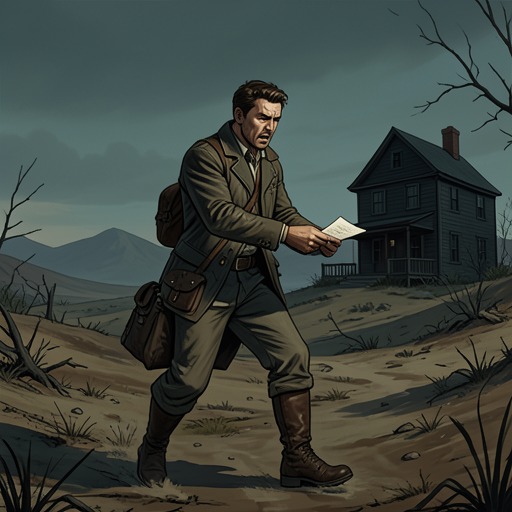
The unnamed narrator approaches the House of Usher on horseback during an autumn journey through a desolate region. The mansion stands beside The tarn beside the Usher house, with a short causeway providing the way across to it. The first view, framed by low clouds, vacant windows, sparse sedges, and decayed trees, produces an intense gloom in the narrator rather than the aesthetic pleasure he might ordinarily find in a bleak landscape. Looking at the house reflected in the still water deepens that response: the reflected windows and trees make the scene feel more oppressive, though the narrator recognizes that his growing apprehension may be shaping what he sees.
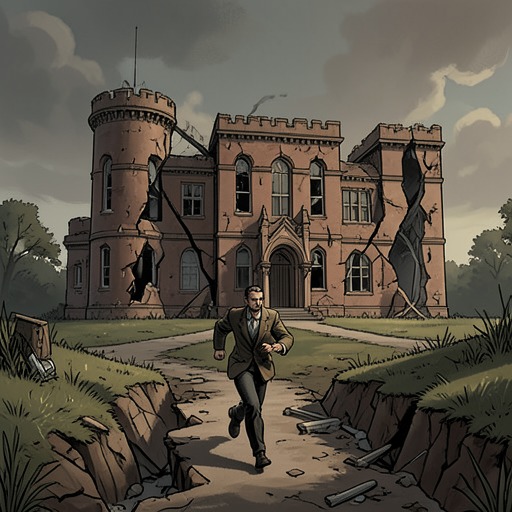
The building appears extraordinarily old. Discoloration and fine growth cover its exterior, and the individual stones seem to be crumbling. Yet no part of the masonry has fallen, and the structure still holds together as a whole. This contrast between apparent coherence and material decay makes the mansion seem unstable without showing it to be on the point of collapse. A barely visible fissure offers the clearest physical sign of a break: it begins at the front roof, follows a zigzag course down the wall, and disappears into the tarn. The narrator notices it before the house’s destruction, so the final rupture transforms an earlier architectural detail into a visible forecast of the ending.
Family Estate and Inherited Identity
The mansion belongs to Roderick Usher, whom the narrator knew as a boy but had not seen for many years. Roderick’s urgent letter brings the narrator to the estate, where the host hopes his company will ease his physical and mental distress. The house is not merely the setting for this reunion: Roderick describes its influence on him as part of his condition. He has remained within it for years, and his superstitious fear links his state of mind to the mansion’s physical form and to the tarn below its walls. This is Roderick’s account of the connection, not an objective explanation of what causes his illness.
The family’s history strengthens the link between house and household. The Usher line has no enduring collateral branch, and inheritance has passed within a direct line for generations. The narrator reasons that the uninterrupted transfer of the estate alongside the family name has blurred the distinction between them. The name House of Usher consequently refers both to the family and to its mansion, a double meaning that makes the building’s fate inseparable from the family’s. Roderick also identifies his sister, Madeline Usher, as his only remaining relative and long-standing companion. Her illness and his fear that he will be left as the last of the line make the family’s fate an immediate presence within the house.
Interior and the Hidden Vault
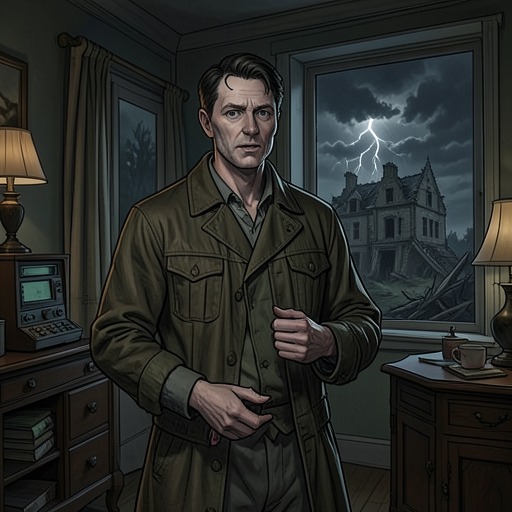
The narrator enters through a Gothic archway and is led through dark, intricate passages to Roderick’s rooms. The interior includes carved ceilings, sombre tapestries, dark floors, and armorial objects. Though these furnishings are familiar in kind to the narrator, their presence within the mansion intensifies his unease. The house thus shapes experience not only through its exterior but through the succession of enclosed rooms and passages that separate its occupants from the outside world.
After Madeline is reported dead, Roderick decides to keep her body for a fortnight before its final burial. He gives practical reasons: the unusual character of her illness, questions from her physicians, and the family burial ground’s remote and exposed situation. The narrator, remembering the physician he encountered at the house, does not oppose the arrangement. Together, the two men carry Madeline to a small vault deep beneath the part of the building where the narrator sleeps. It has no natural light and has long been unopened. Copper sheathing covers part of its floor and the long arched approach; the massive iron door is also protected. These details make the vault a distinct, deeply enclosed space within the mansion, and place the hidden consequence of the burial directly beneath the household’s lived rooms.
The burial also reveals a family connection that had not previously been explained. When the men look at Madeline, the narrator notices her close resemblance to Roderick. Roderick then discloses that they are twins and that a powerful, difficult-to-explain sympathy has always existed between them. The vault therefore holds not simply the body of a sister but the twin whose fate Roderick experiences as bound to his own. Her cataleptic episodes complicate the certainty of the death declaration: although her physicians had not overcome the illness, the narrative initially presents the entombment as following her reported death.
The House as a Site of Return
In the days after the burial, Roderick’s behavior changes. He abandons his customary occupations, moves restlessly through the rooms, and appears increasingly afraid. On a stormy night, the narrator tries to distract him by reading The Mad Trist. As the tale describes a door being forced open, the narrator hears a corresponding sound from somewhere in the mansion. Later, sounds associated with the tale’s dragon and shield are followed by further noises in the house. The sequence turns the building into an acoustic setting where the narrator’s reading and the events unfolding within the hidden vault appear to answer one another.
Roderick finally tells the narrator that he has heard Madeline moving in her coffin for days, but has been afraid to speak. He interprets the sounds of the story as the breaking of her coffin, the movement of the iron door, and her struggle to leave the vault. The doors to the room open, and Madeline appears at the threshold. Her return confirms that the burial took place before her death; she falls against Roderick, and both twins die. The mansion has concealed the evidence of her continued life beneath the rooms where Roderick and the narrator remain, until the sounds can no longer be kept apart from what is happening there.
Collapse and Significance
The narrator flees the mansion and crosses the causeway. From outside, he sees the blood-red setting moon through the fissure previously observed on the wall. The crack widens, the walls split apart, and the building falls into the tarn. Its destruction follows the deaths of Roderick and Madeline and completes the story’s fusion of family history with architectural fate: the family name has referred to the house as well as its occupants, and now both the twins and their ancestral residence disappear from the scene.
The House of Usher’s significance rests on this convergence of setting and consequence. Its preserved exterior conceals deep decay; its rooms contain both the family’s domestic life and its hidden burial vault; and its fissure makes a private structural weakness legible before it becomes catastrophic. The story leaves the cause of the mansion’s apparent influence unresolved, distinguishing Roderick’s belief in the house from the narrator’s explanations and observations. Its final collapse, however, gives the building an unmistakable role in the ending: it does not merely witness the Usher family’s extinction but falls at the same moment the last members of that family die.